
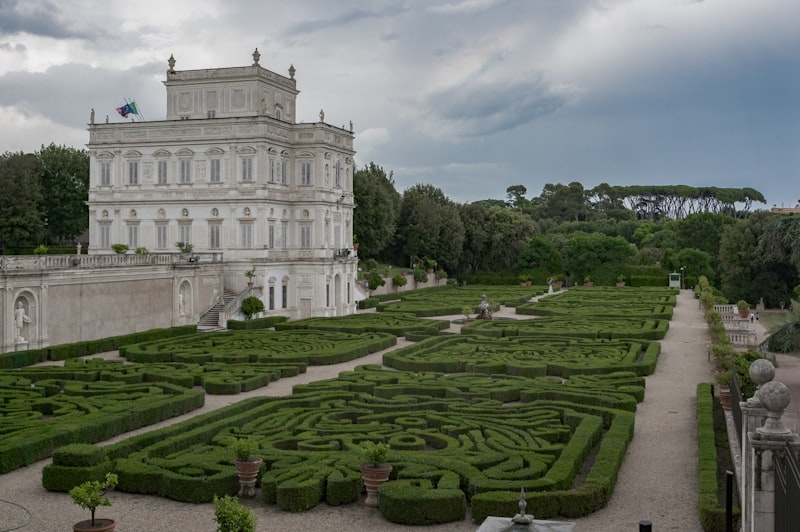
Eric Raymond’s 1998 essay gave us two models of software development: the cathedral (planned, controlled, proprietary) and the bazaar (open, community-driven, emergent). Drew Breunig at O’Reilly argues we now have a third: the Winchester Mystery House. Sarah Winchester built her famous mansion not out of necessity but because she enjoyed architecture, and kept building and expanding for decades. The result was 500 rooms, staircases to nowhere, and doors opening onto walls. Breunig’s claim is that AI-generated code, at roughly 1,000 lines per commit compared to a human developer’s 10-20 lines per day, is producing software with the same character: sprawling, personal, built for the builder’s own purposes, and indifferent to outside users.
This is not a hit job. Breunig frames it as a genuine third model with its own logic. When code generation becomes effectively free, developers can build tools that fit their specific workflows without the overhead of making something distributable or maintainable by others. The economic argument that previously pushed individual developers toward open source contributions (shared cost, shared benefit) weakens considerably when your marginal cost of building something yourself approaches zero. The mystery house is a rational response to cheap implementation.
The bit that needs some real attention is the open source problem it creates. The volume of agent-generated pull requests and bug reports has become unmanageable for many maintainers. Daniel Stenberg ended curl’s bug bounty programme because submissions were overwhelmingly low-quality AI-generated noise. GitHub shipped features to let maintainers disable contributions entirely. Breunig puts it accurately: implementation is now running at machine speed while coordination and review still run at human speed. The bazaar model assumed a natural ratio between contribution volume and review capacity. That ratio is now broken.
Breunig’s practical advice for product builders is worth taking seriously. He argues that the most defensible software products are the unglamorous infrastructure that developers want to outsource: databases, security tooling, payment processing, logging. If developers are going to build their idiosyncratic mystery houses, they still need the pipes and wiring, and they will happily pay someone else to manage those. The Winchester builder does not want to lay their own foundations. Breunig calls this “plumbing,” and plumbing companies are going to be fine.
The honest limitation of this framing is that Winchester Mystery Houses are mostly useless to anyone except their builder. The open source ecosystem, despite the noise problem, still produces the foundational infrastructure everyone depends on. The question Breunig does not fully resolve is how you maintain high-quality shared infrastructure in a world where contributing to it competes with building your own private mansion. Good maintainers are already burning out. The mystery house era will accelerate that, and no amount of tooling for signal-to-noise management changes the underlying incentive problem.