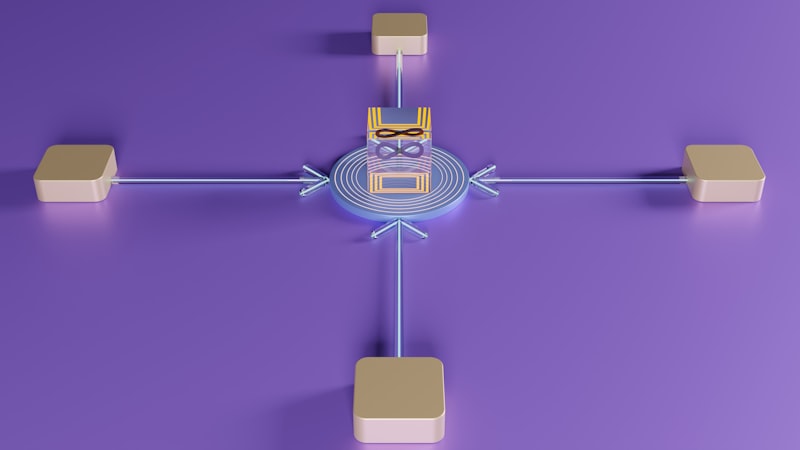
Deep Agents v0.5 shipped on April 7 with async subagents. In the previous version, a supervisor agent that delegated to a subagent had to wait for the subagent to complete before it could do anything else. The new version returns a task ID immediately and executes the subagent remotely. The supervisor can fire off multiple background tasks, continue a conversation, and retrieve results whenever they are ready. For tasks that take seconds, this does not matter. For research, document analysis, or data processing that runs for minutes, blocking the entire orchestrator was a significant bottleneck.
Async subagents implement the Agent Protocol, a standardised interface for communicating with remote agents. An orchestrator running on one machine can dispatch to specialised agents on different hardware, different models, or different deployments, as long as those agents implement the protocol. A lightweight orchestrator coordinating a research agent, a code agent, and a document analysis agent does not need to run them all in the same process or on the same tier of hardware. Agent systems are typically monolithic today: one model with a long tool list and a long context window handling everything. The Agent Protocol points away from that.
The v0.5 release also expanded the virtual filesystem to handle PDFs, audio, and video alongside images. File type detection is automatic. Multimodal agent tasks previously required custom handling for anything that was not text or an image. A document ingestion agent, a meeting transcript processor, or a video content extraction pipeline can now pass files through the standard filesystem abstraction rather than building bespoke integrations.
Whether the async pattern is right depends on task structure. If your agent tasks are truly independent after dispatch, async subagents give you better throughput and a more responsive orchestrator. If tasks have tight dependencies, where the output of one subagent determines the input of the next, the gain is minimal. Most real-world agent workflows are a mix: some parallel phases, some serial dependencies. The right structure is a task graph, not a flat list of delegations, and that is what the async model enables.
If the Agent Protocol gets meaningful adoption, it becomes possible to mix and match agent implementations across frameworks rather than committing entirely to one library’s model. Protocol standardisation takes years to matter and then matters a lot. Deep Agents is early for this.